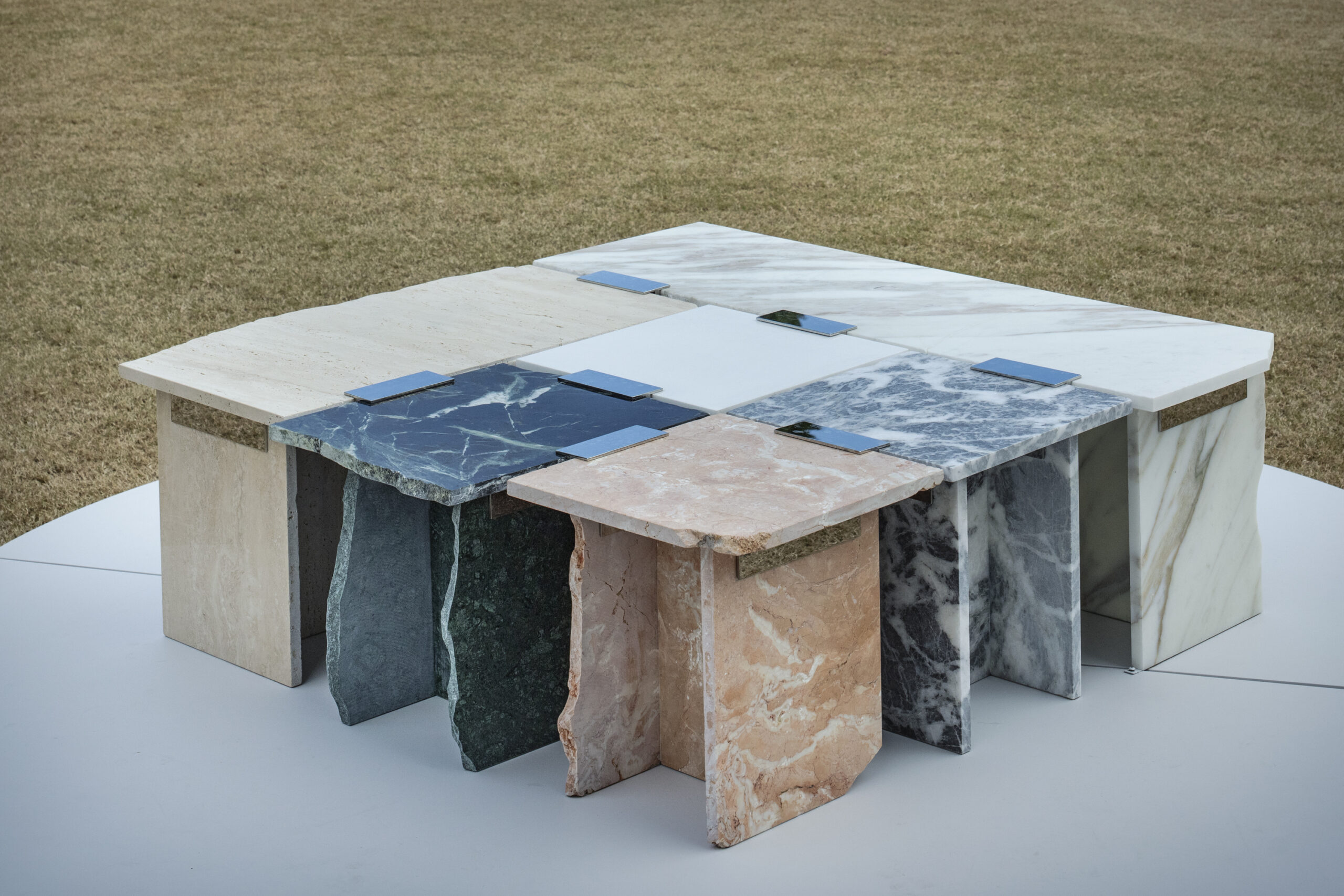
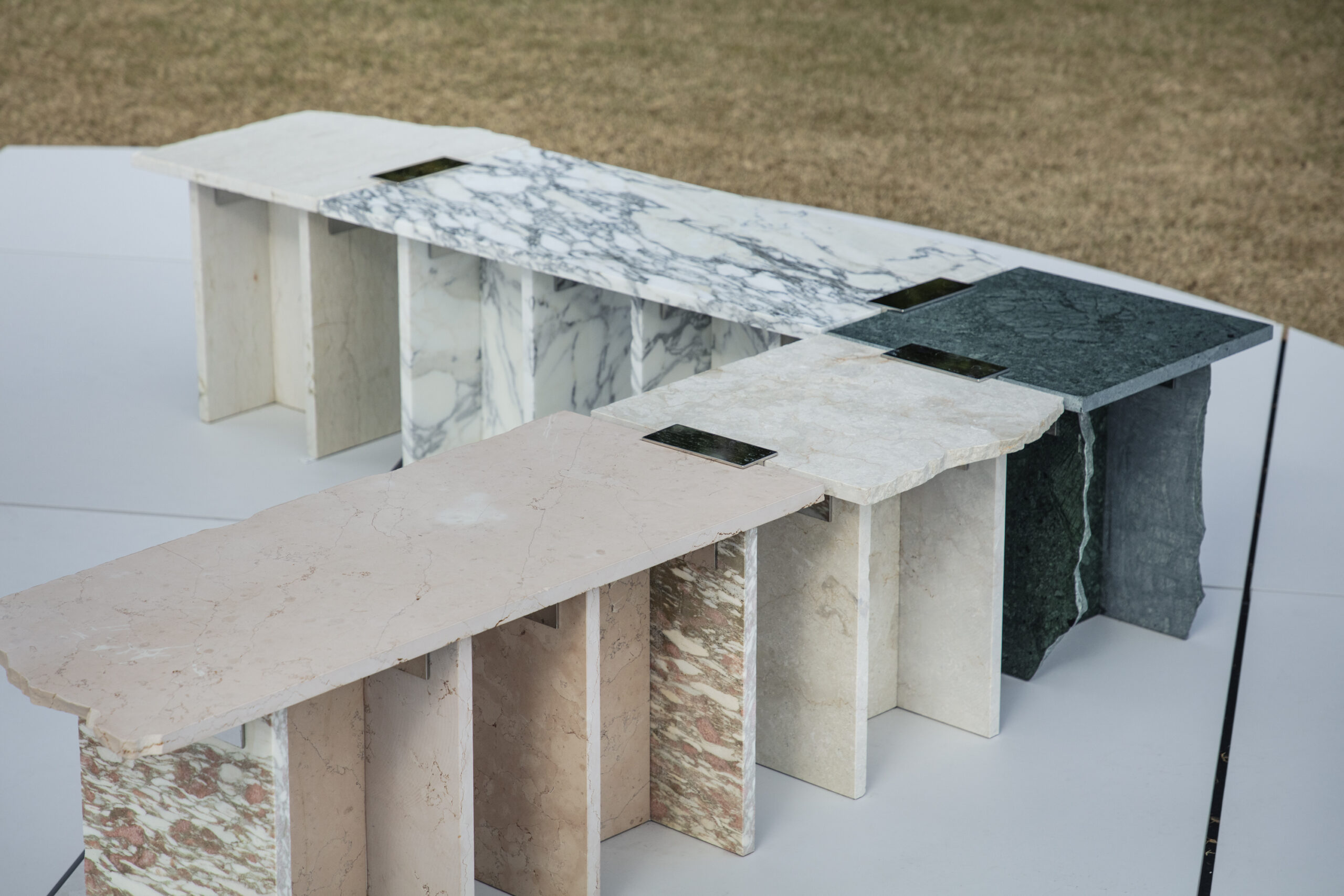
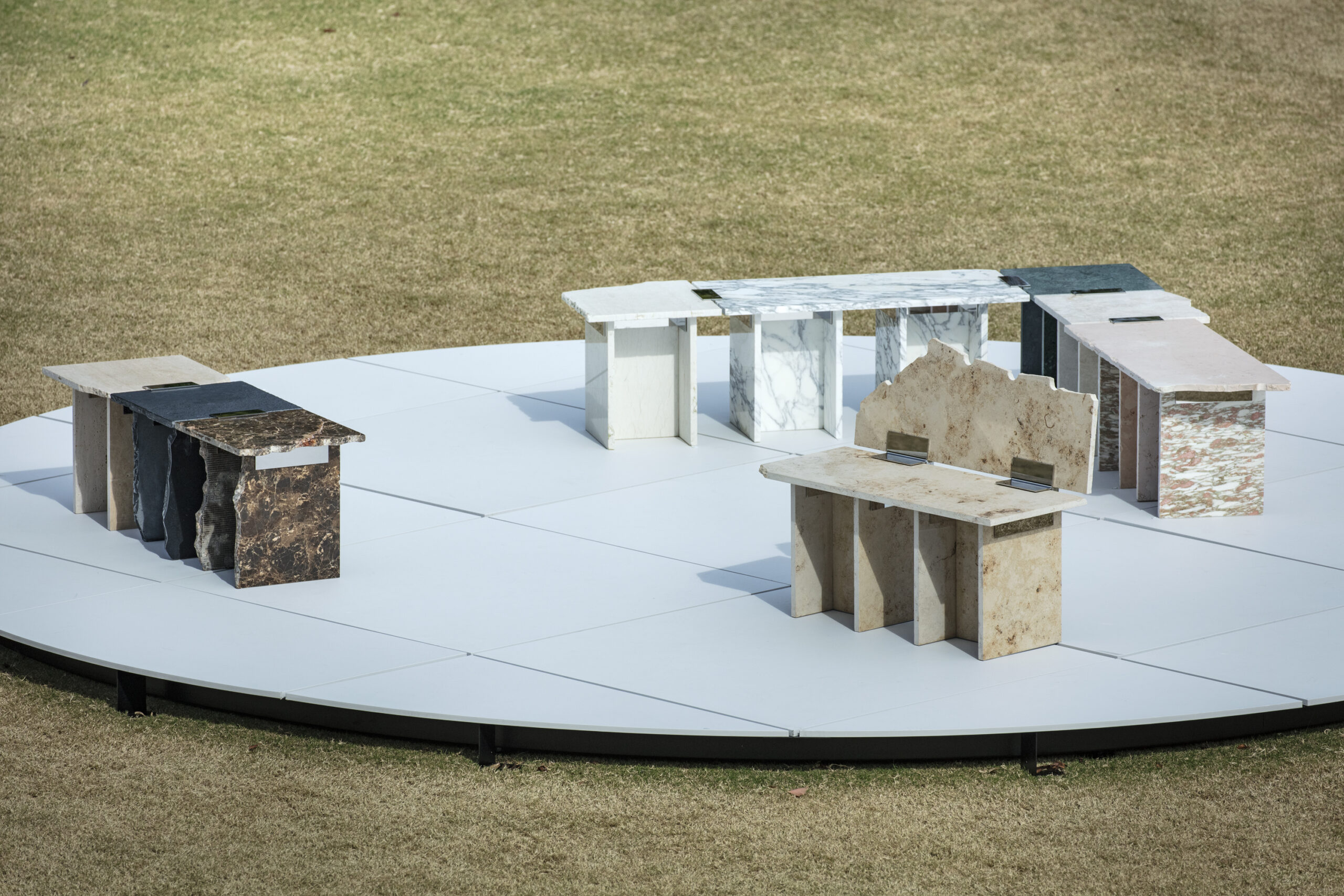
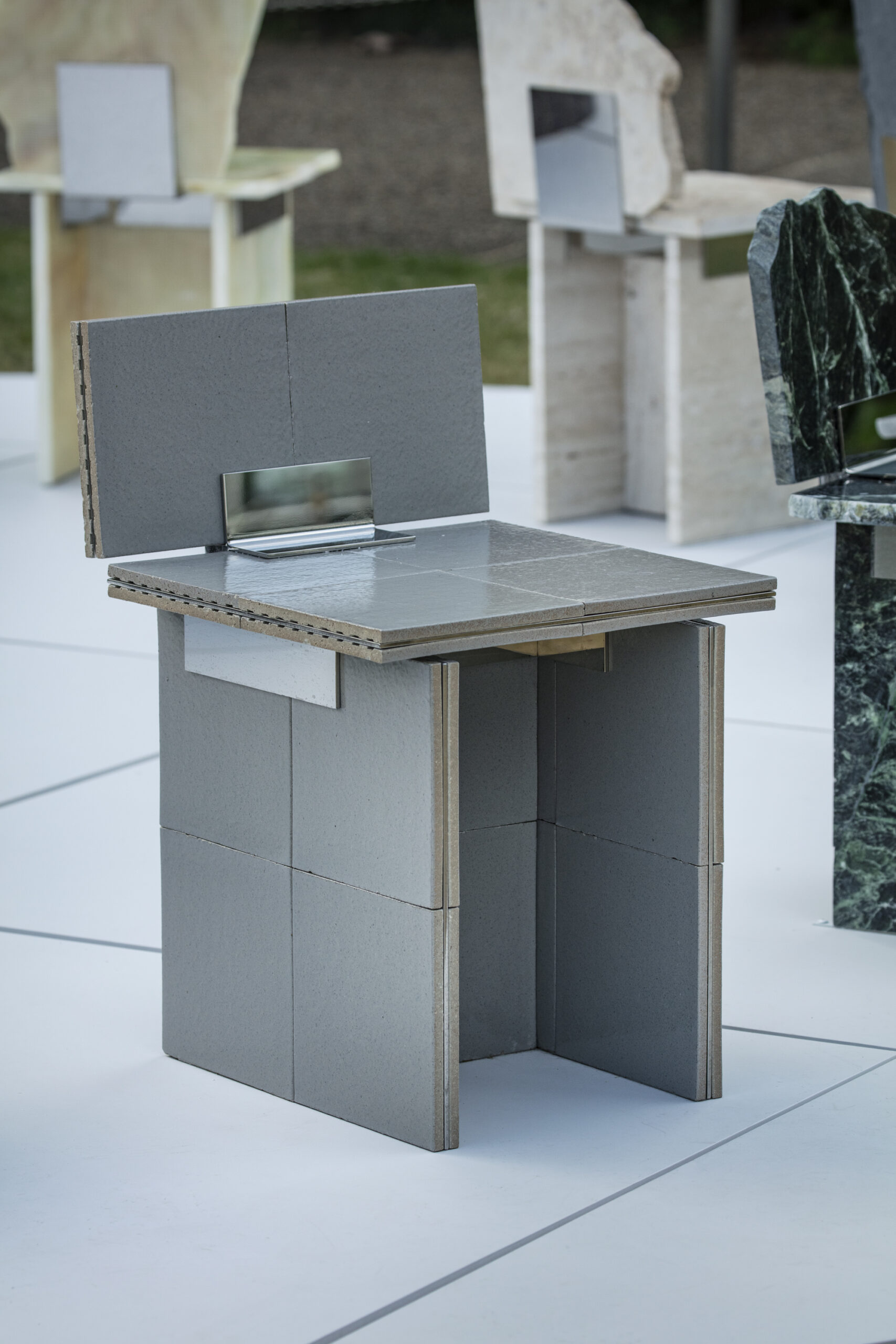
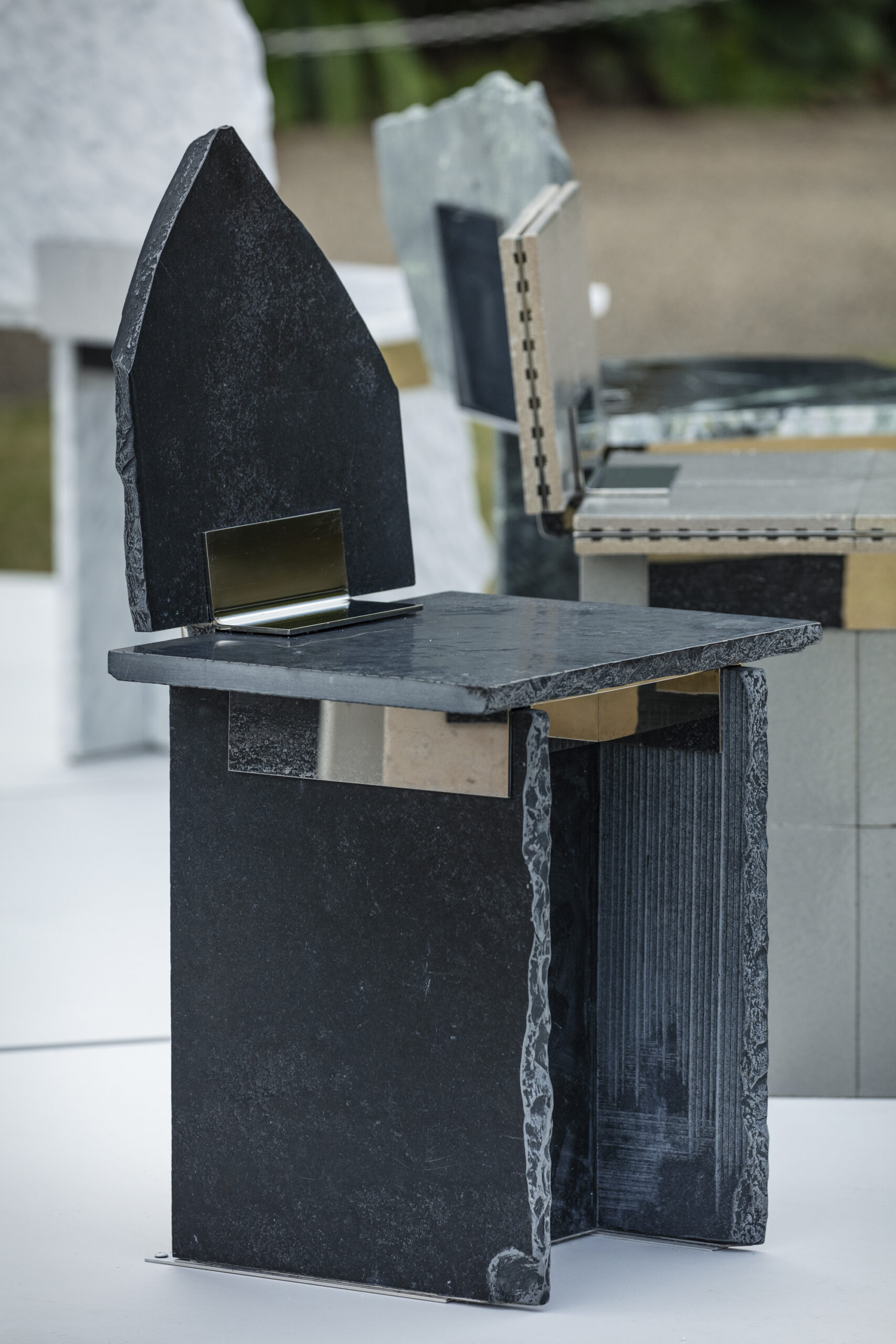
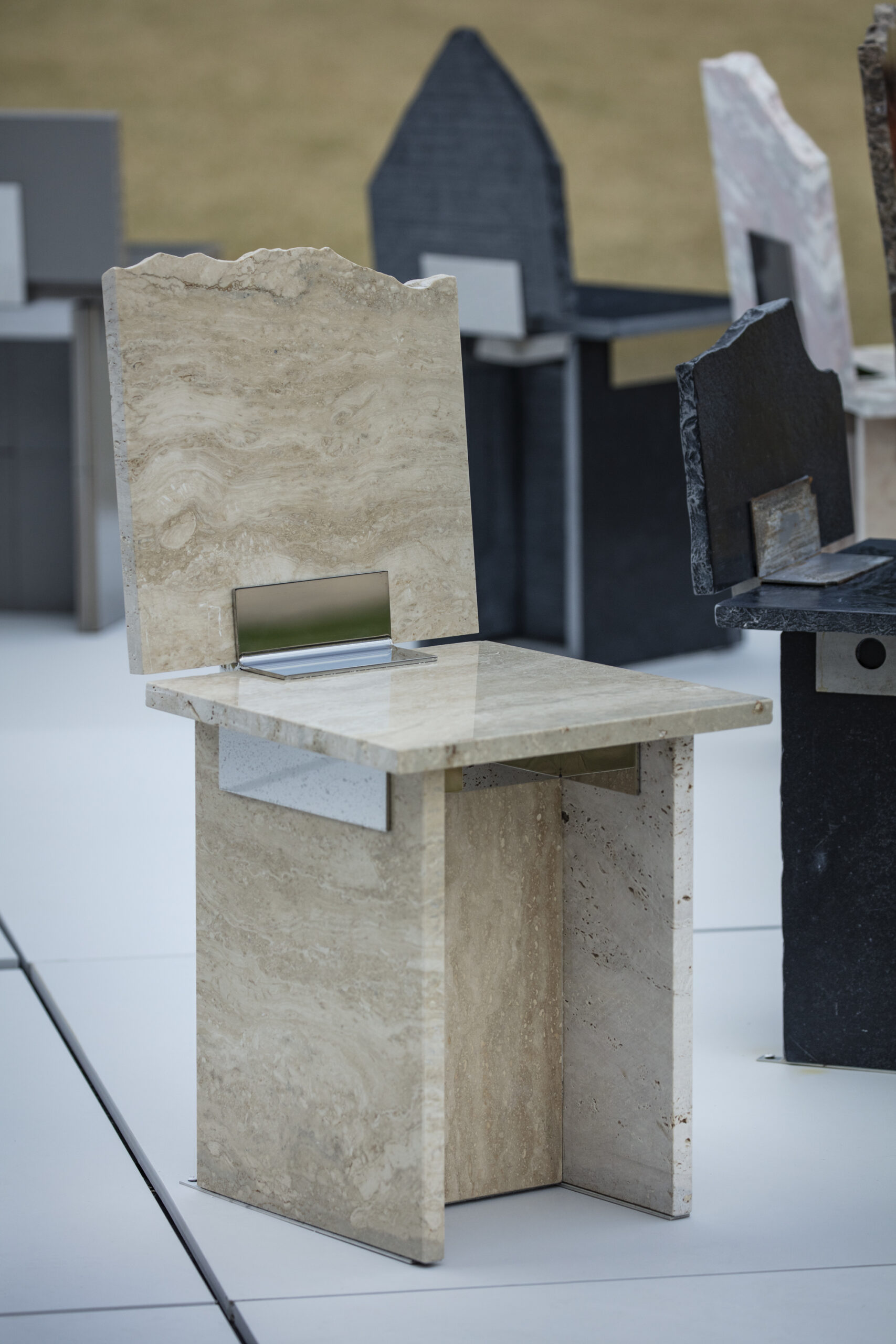
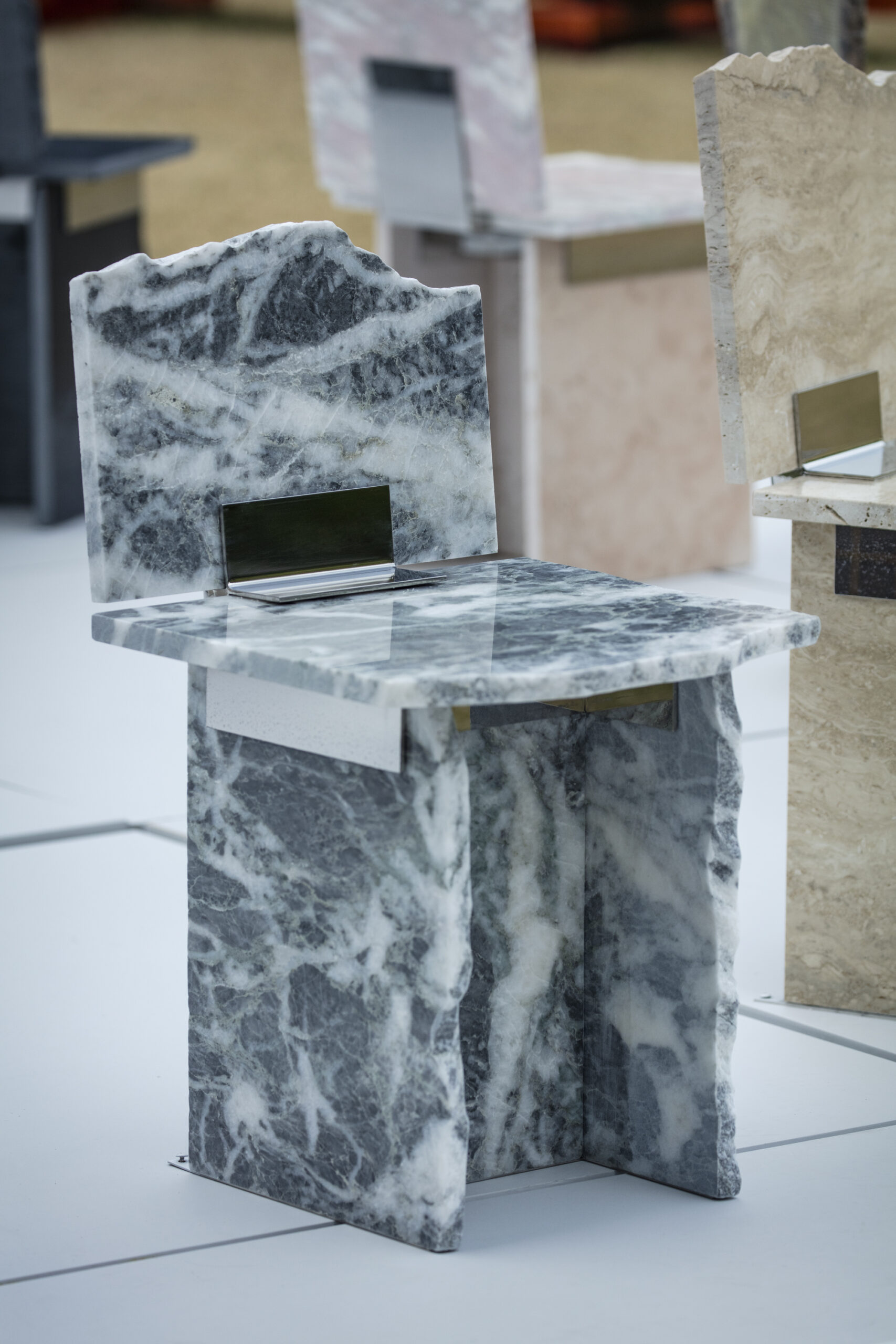
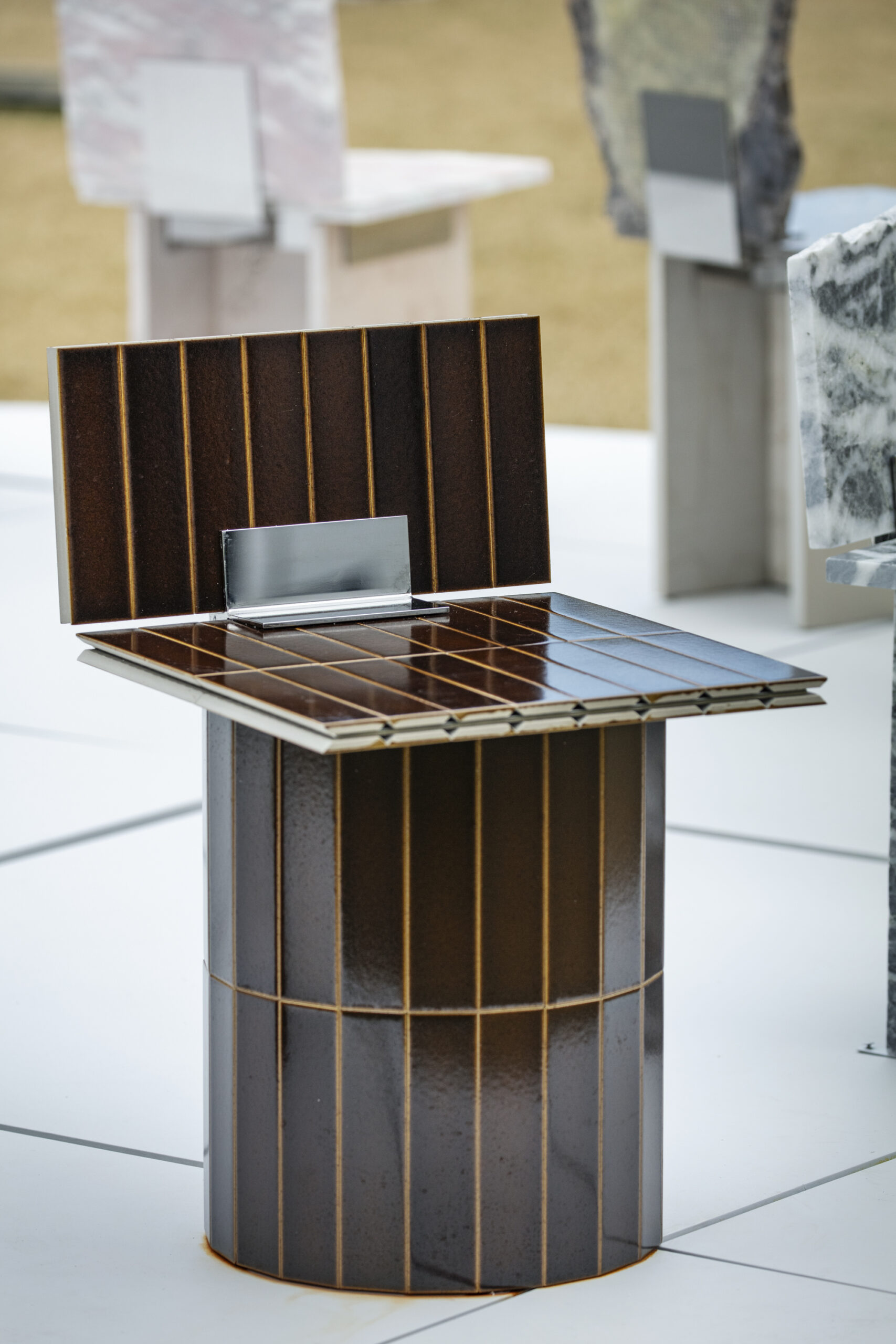
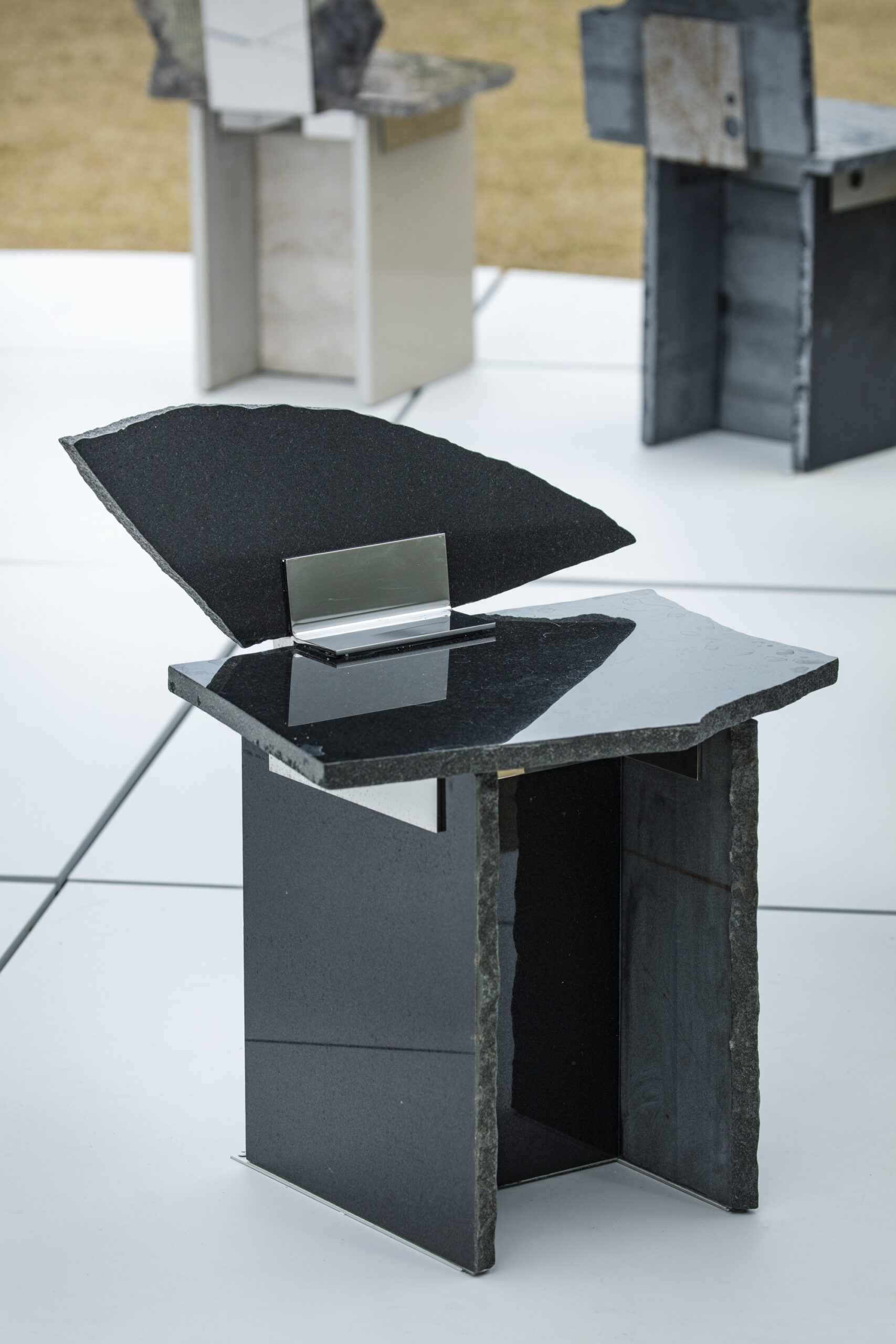
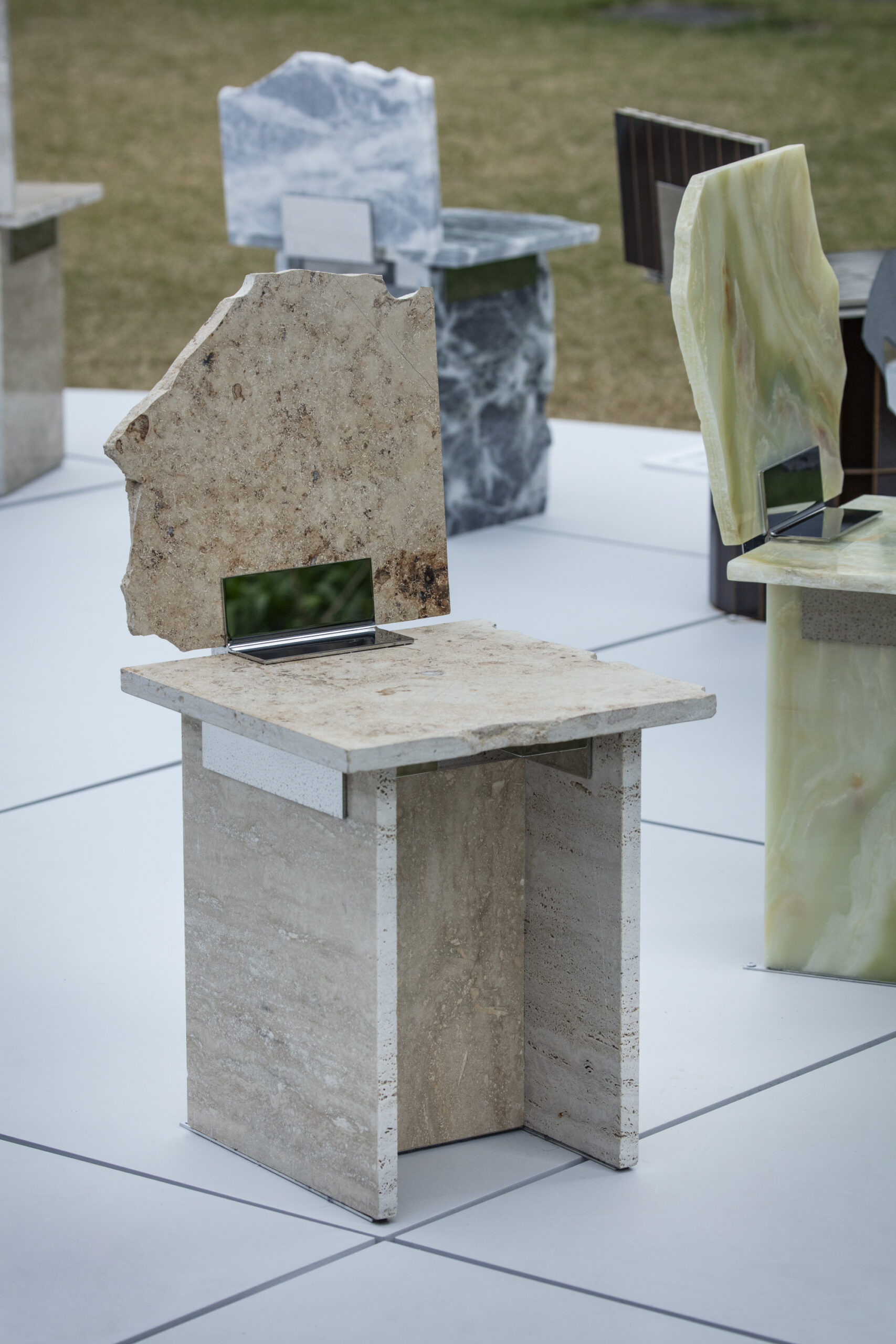
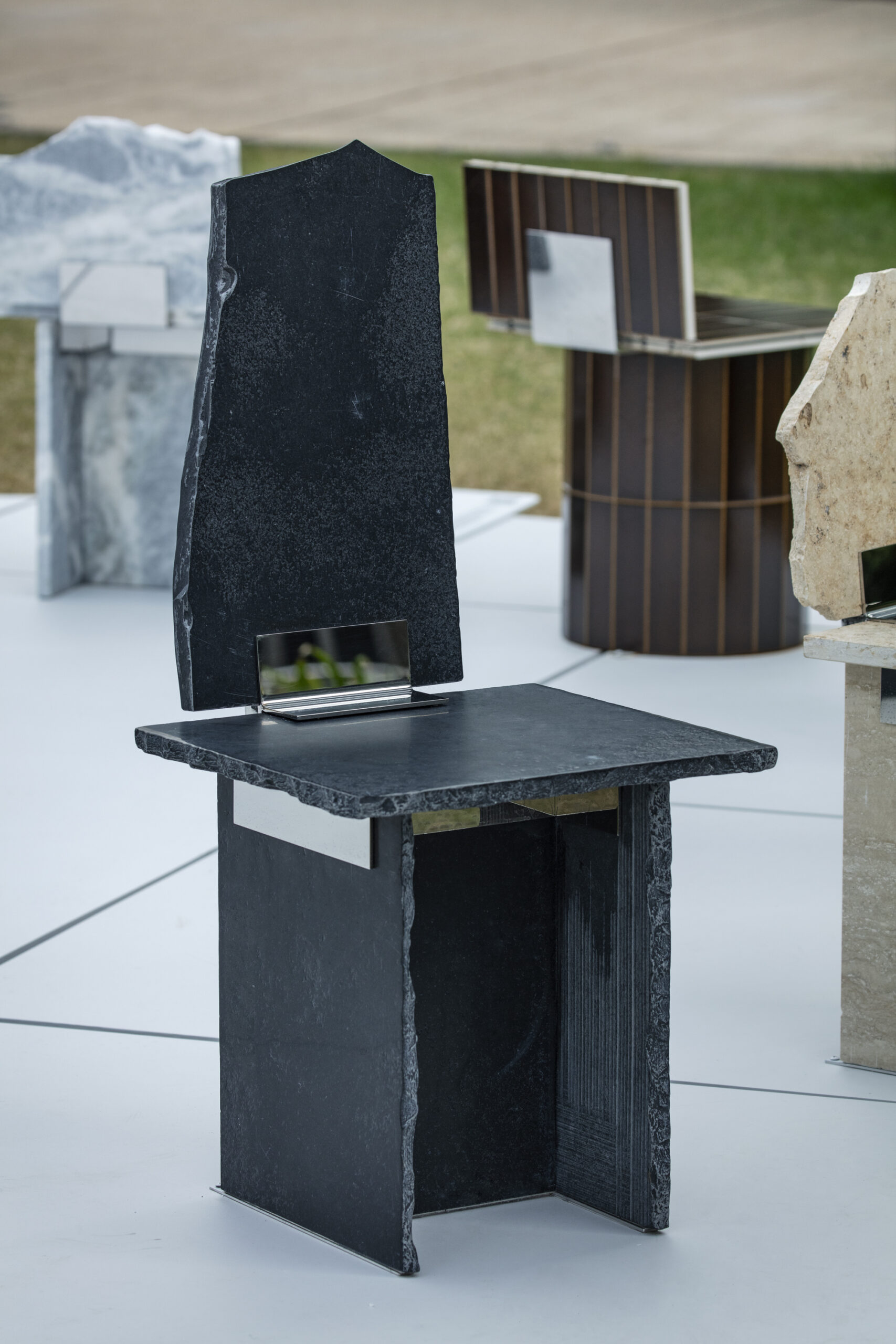
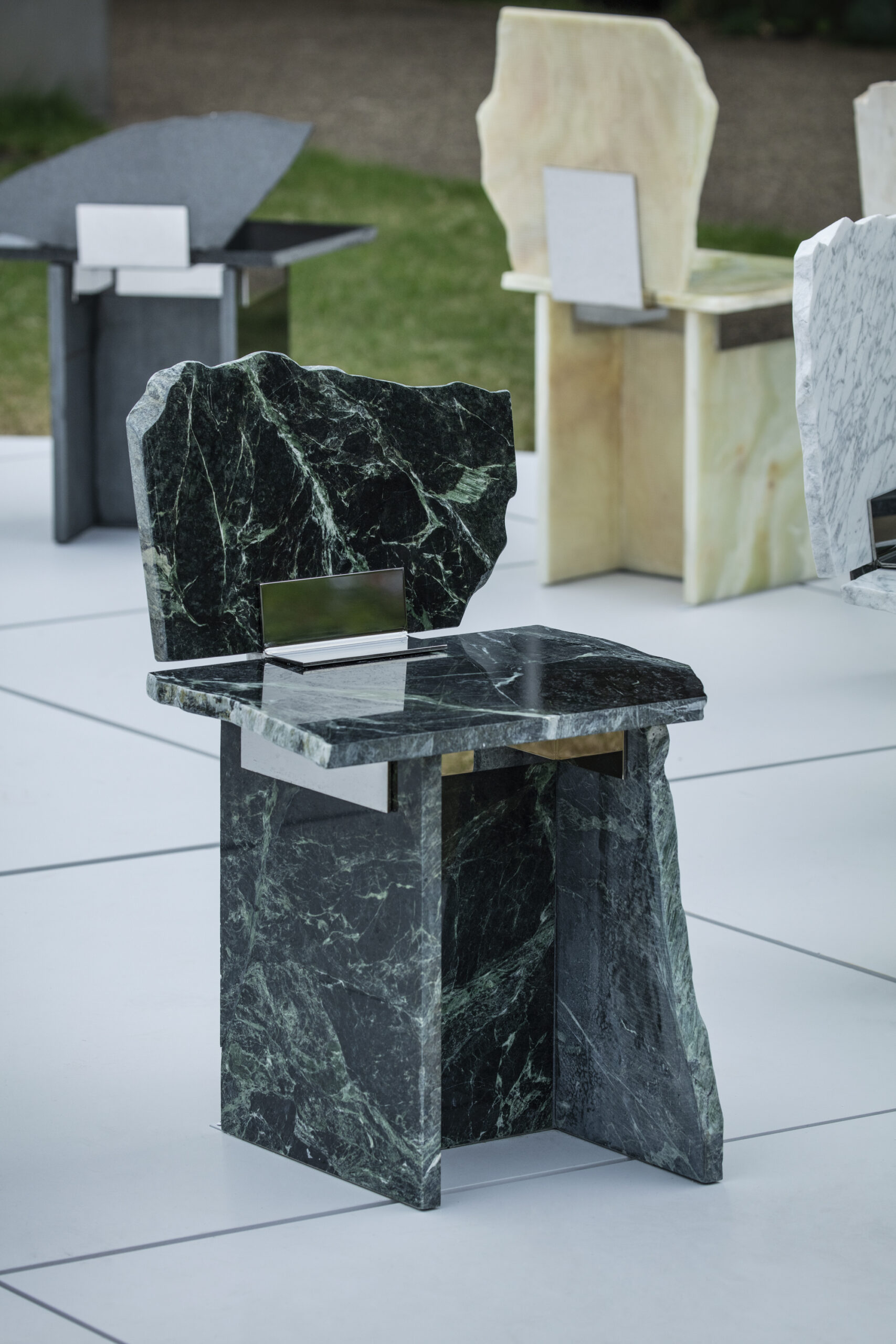
SUR+PLUS is a project that asks how surplus materials generated within systems of production might be received rather than treated as waste — and how, in receiving, different things can coexist. The ordering system of “required quantity + a few percent” is a form of risk management widely used across many fields of production, not only in interior construction. To prepare for damage, miscounts, delivery errors, or the complexity of design and installation, a few percent of extra material is added to the required quantity. As a result, materials inevitably remain unused after construction as surplus. Surplus, therefore, is not accidental; it is embedded within the system of production itself. Materials commonly used in interior construction – such as stone, wood, tiles, and carpet — each possess different thicknesses, textures, and background narratives. In SUR+PLUS, these fragments are inserted into joint components, transforming them into structural roles such as seats, backs, and legs. In this way, SUR+PLUS becomes a system through which a chair can be formed without cutting new material. Connections, or joints, have long been an important theme in architecture and design, often developed as techniques for precisely connecting materials to produce uniform and stable structures. In SUR+PLUS, however, connection does not aim for uniformity. Fragments are bound together as they are – cracks, chips, and traces of time intact. What emerges is a form of coexistence — elements connected while their differences remain. At the same time, the concept of connection invites a reconsideration of relationships – between people and people, people and objects, and objects and objects. In SUR+PLUS, the joint components do more than physically connect materials. They also connect the narratives embedded within them, along with the bodies and thoughts that engage with them. Through materials generated as surplus within systems of production, SUR+PLUS asks how different elements might be accepted as they are, and reconnected while holding their differences. In doing so, the project reveals what production structures often overlook, and proposes one possible form of coexistence in contemporary society, where diverse cultures and materials intersect.
SUR+PLUSは、生産構造の中で生まれる余剰材を廃棄物として処理するのではなく、いかに受け入れ、異なるものが共存できるかを問うプロジェクトです。 「必要数量+数%」という発注形式は、内装工事に限らず、多くの製造現場で繰り返されるリスク管理の形式です。欠損や数量違い、誤納、設計や納まりの複雑さに備え、必要数量に数%の予備が加えられます。その結果、施工後には使用されなかった素材が余剰として残されます。余剰は偶発的に生まれるのではなく、生産構造そのものに内在していると言えます。 石、木、タイル、カーペットなど、内装現場で扱われる多様な素材は、それぞれ異なる厚みや質感、背景をもっています。SUR+PLUSでは、それらの素材は、接続パーツに差し込まれることで、座面、背面、脚といった構造的役割へと変換されます。それは、新しい部材を切り出すことなく椅子を成立させるシステムでもあります。 接続(ジョイント)は、建築やデザインの歴史において重要なテーマであり続けてきました。多くの場合、それは素材を正確に接続し、均質な構造を成立させるための技術として発展してきました。 しかし、SUR+PLUSにおける接続とは、均質化を目指すのではなく、割れや欠け、時間の痕跡を含んだ状態で素材を結びつける行為です。そこで立ち上がるのは、差異を抱えたまま共存するかたちです。 また、接続という概念は、「人と人」「人とモノ」「モノとモノ」の関係性を再考させる視座でもあります。SUR+PLUSにおいて接続パーツは、物理的な素材同士の接続にとどまらず、それぞれの素材が内包する背景の物語、さらにはそこに関わる身体や思考をも接続します。 余剰という生産構造の中で生まれた素材を通して、異なるものをいかにそのまま受け入れ、差異を抱えたまま接続し直すことができるのか。SUR+PLUSは、その問いをかたちにする試みです。それは、生産構造において見過ごされてきた問題の可視化であり、多様な文化や素材が混在する現代社会における共存のひとつのあり方を示しています。